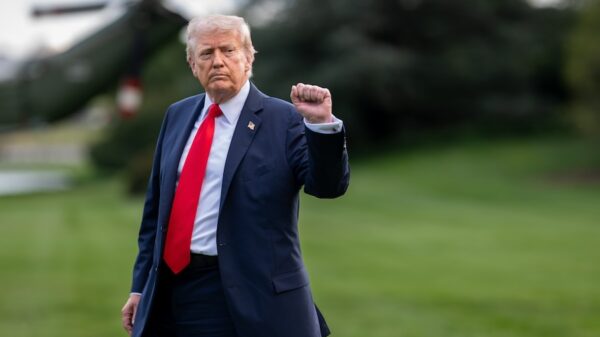

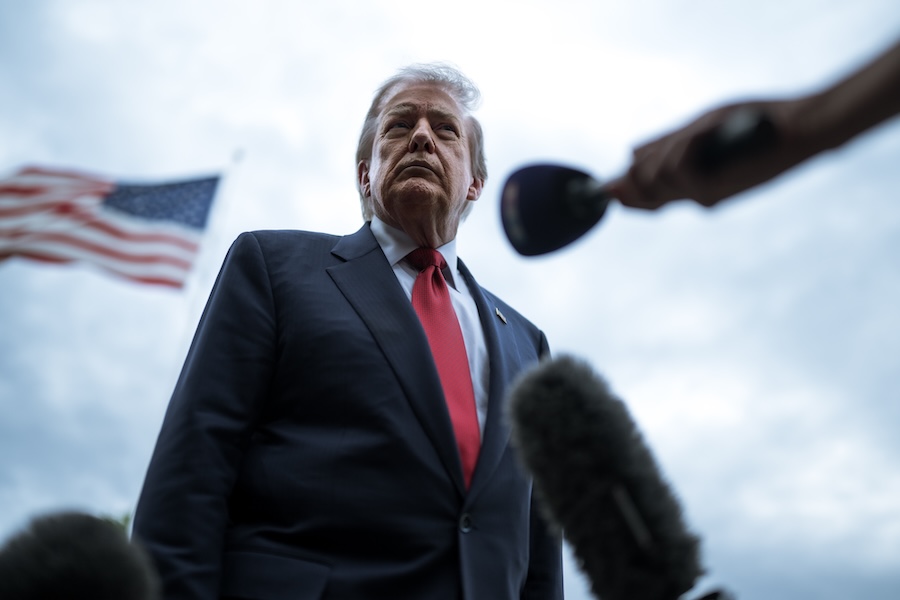
House lawmakers delivered a major bipartisan rebuke to President Donald Trump on Wednesday, passing a war powers resolution aimed at limiting the administration’s ability to continue military operations against Iran without congressional approval. The vote marked the most significant political setback Trump has faced since the conflict began in February and underscored growing frustration on Capitol Hill over the prolonged war and its economic consequences.
The resolution passed the House by a vote of 215-208, with four Republicans breaking ranks and joining Democrats in support of the measure. Republican Reps. Thomas Massie of Kentucky, Brian Fitzpatrick of Pennsylvania, Tom Barrett of Michigan and Warren Davidson of Ohio sided with Democrats in what amounted to a rare bipartisan challenge to Trump’s foreign policy agenda.
The measure would require the administration to either obtain congressional authorization for continued military action against Iran or withdraw U.S. forces from hostilities. While the resolution faces additional hurdles before it can take effect and is unlikely to immediately alter military operations, the vote sent a powerful political message about growing concerns over executive war powers.
WATCH:
!function(r,u,m,b,l,e){r._Rumble=b,r[b]||(r[b]=function(){(r[b]._=r[b]._||[]).push(arguments);if(r[b]._.length==1){l=u.createElement(m),e=u.getElementsByTagName(m)[0],l.async=1,l.src=”https://rumble.com/embedJS/u9lmzn”+(arguments[1].video?’.’+arguments[1].video:”)+”/?url=”+encodeURIComponent(location.href)+”&args=”+encodeURIComponent(JSON.stringify([].slice.apply(arguments))),e.parentNode.insertBefore(l,e)}})}(window, document, “script”, “Rumble”);
Rumble(“play”, {“video”:”v78llbq”,”div”:”rumble_v78llbq”});
The conflict, now entering its fourth month, has increasingly become a political liability for the White House. What initially enjoyed broad Republican support has faced mounting criticism as fighting dragged on, negotiations repeatedly stalled and economic pressures mounted at home. Lawmakers from both parties have pointed to rising gasoline prices, inflation concerns and the lack of a clearly defined endgame as reasons for pushing back against the administration.
Democrats have repeatedly attempted to force votes limiting Trump’s war authority throughout the conflict, but previous efforts failed. The successful vote on Wednesday reflected shifting political winds, particularly among Republicans facing pressure from constituents frustrated by the war’s economic impact. House Republicans previously delayed a similar vote in May when leadership feared they lacked the votes to defeat the resolution.
House Speaker Mike Johnson strongly opposed the measure, warning before the vote that restricting the president’s authority could undermine ongoing diplomatic negotiations.
“The president is now in the process of, of concluding a peace agreement, and we have to allow him the latitude to do that, and I think a war powers resolution right now is very untimely, and a very, very negative, and dangerous thing for the country,” Johnson said.
The House vote follows growing bipartisan unease in the Senate, where several Republicans have also expressed concerns about the conflict and Congress’ role in authorizing military action. Secretary of State Marco Rubio faced questioning from lawmakers this week regarding the administration’s strategy, with several members demanding greater oversight and a clearer explanation of long-term objectives.
!function(r,u,m,b,l,e){r._Rumble=b,r[b]||(r[b]=function(){(r[b]._=r[b]._||[]).push(arguments);if(r[b]._.length==1){l=u.createElement(m),e=u.getElementsByTagName(m)[0],l.async=1,l.src=”https://rumble.com/embedJS/u9lmzn”+(arguments[1].video?’.’+arguments[1].video:”)+”/?url=”+encodeURIComponent(location.href)+”&args=”+encodeURIComponent(JSON.stringify([].slice.apply(arguments))),e.parentNode.insertBefore(l,e)}})}(window, document, “script”, “Rumble”);
Rumble(“play”, {“video”:”v78l7gc”,”div”:”rumble_v78l7gc”});
Despite the symbolic significance of Wednesday’s vote, the practical impact remains uncertain. Congressional leaders and analysts note that any effort to directly force troop withdrawals would face procedural obstacles and likely encounter resistance from the White House.
As lawmakers increasingly hear complaints from voters about energy prices and economic uncertainty, the Iran war has evolved from a national security issue into a growing domestic political headache, setting the stage for an even larger battle over war powers and foreign policy in the months ahead.