

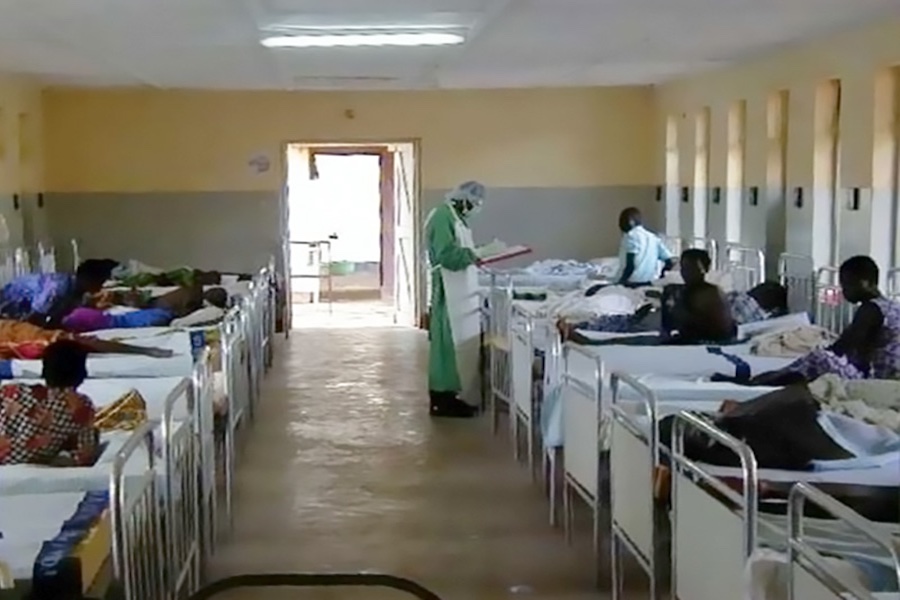
Robert Redfield, the former director of the Centers For Disease Control (CDC), has warned that the ongoing Ebola outbreak in central Africa involving the Bundibugyo strain could develop into a significant regional health event that spawns global impacts.
In an interview on NewsNation on Thursday, May 21, Redfield described the situation as “very disruptive” and “moving very rapidly.” He also expressed concern over delays in terms of identifying and containing the outbreak.
“Normally, we recognize them when we have five, 10 cases, at most,” he stated. “This one really wasn’t picked up until there was over 100 cases.” The former director added that he and other officials he has conversed with are “stunned” at the slow speed of detection and early action.
He went on to predict that the outbreak will worsen and likely spread beyond the borders of currently affected countries. “I suspect this is going to become a very significant pandemic, probably going to leak into Tanzania, leak into southern Sudan, maybe leak into Rwanda,” Redfield, who led the CDC from 2018 through 2021, continued.
Redfield ultimately described the situation as “a significant outbreak that’s of significant public health international concern” due to its scale and initial recognition challenges.
Former CDC Director Robert Redfield is sounding the alarm over the growing Ebola outbreak in Africa, warning the virus could become "a very significant pandemic."
MORE: https://t.co/IS1tDgoDPy pic.twitter.com/WxhyHFOq8d
— NEWSMAX (@NEWSMAX) May 23, 2026
The outbreak was officially declared by the Democratic Republic of the Congo (DRC) Ministry of Health on May 15, 2026, in Ituri Province, with laboratory confirmation of the Bundibugyo virus. This strain, first identified in Uganda in 2007, differs from the more commonly reported Zaire ebolavirus in prior large outbreaks.
Unlike some other strains, there is currently no approved vaccine specifically tailored for Bundibugyo, according to the World Health Organization.
Initial reports indicated clusters of severe illness with symptoms including fever, body pain, weakness, vomiting, and in some cases bleeding. Transmission of Ebola — the most well known virus in the hemorrhagic fever family — occurs through direct contact with bodily fluids of infected individuals or contaminated surfaces.
The affected regions in eastern DRC face challenges from ongoing conflict, population displacement, mining activities, and cross-border movement, which have complicated containment efforts. Cases have also been reported in Uganda, most of which are linked to travel from DRC.
As of May 22, health officials in the affected countries have reported 744 suspected cases, 83 confirmed cases, and 176 suspected deaths. This includes two confirmed cases (one death) in Uganda among individuals who traveled from DRC.
Cases have been identified in Ituri, Nord-Kivu, and a new case in Sud-Kivu Province. Estimates from some research groups suggest the true number of infections may be higher than official confirmed counts.
RELATED: Officials Identify Patient Zero In Deadly Hantavirus Outbreak