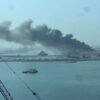


Multiple explosions have been reported on Tuesday, June 9 in southern Iran, not far from the vital Strait of Hormuz. The strikes come after an Iranian drone downed a U.S. attack helicopter over the Strait of Hormuz, after which President Donald Trump vowed a response.
Strikes were reported in southern Iran, particularly in areas around Bandar Abbas, Sirik Port, and Qeshm Island in Hormozgan Province near the Strait of Hormuz. Iranian media, including Mehr News Agency, and local accounts described the sounds of blasts, with some reports noting at least three to four explosions in the region.
U.S. Central Command (CENTCOM) described the strikes as necessary self-defense measures in response to Iranian aggression. “U.S. Central Command (CENTCOM) forces began launching self-defense strikes against Iran at 5 p.m. ET today at the Commander in Chief’s direction, in response to yesterday’s downing of a U.S. Army Apache helicopter,” CENTCOM said in a statement.
“The mission is a proportional response to unjustified Iranian aggression,” the statement added.
Reported U.S. strike locations in Iran so far:
• Bandar Abbas
• Qeshm Island
• Sirik pic.twitter.com/JDlWw8nwGr— Open Source Intel (@Osint613) June 9, 2026
“This is a response to what they did they did with our helicopter last night, and I believe the response should be very strong, very powerful, and that’s what this one is,” President Donald Trump told ABC News after the strikes were launched.
The Apache incident occurred on June 8 while the helicopter was patrolling over the Strait of Hormuz. “I have just been informed by our Great Military that last night the Iranians shot down one of our highly sophisticated Apache Helicopters while patrolling over the Strait of Hormuz. There were two pilots involved, both are safe and uninjured. Nevertheless, the United States must, of necessity, respond to this attack,” President Trump said following the incident.
Both pilots were rescued with the use of an unmanned autonomous vehicle after the crash.
CENTCOM’s framing emphasized the strikes as defensive and limited in scope, consistent with ongoing efforts to protect U.S. forces and maintain stability in the region amid a fragile ceasefire context that has been in place since mid-April. It is unclear whether additional strikes are planned as of this report.
Tuesday’s exchange of fire marks the second serious escalation of the conflict in as many days. On Sunday, Iran launched a series of ballistic missiles towards Northern Israel in response to Israeli military operations in Southern Lebanon. All incoming projectiles were shot down, and no casualties were recorded.
In response, Israel launched a number of retaliatory strikes targeting missile and drone-firing positions across the country. Israeli officials described the strikes as limited in scope and emphasized that they were a direct response to Iranian aggression.
It is unclear whether Iran intends to respond to Tuesday’s strikes. Previous exchanges of fire during the fragile ceasefire have involved Iranian strikes targeting infrastructure and military targets in the Gulf States.
The Trending Politics News app is your home for breaking updates. Download it FREE today!