

A number of South Carolina Republicans in the state Senate joined Democrats on Tuesday to defeat a procedural vote needed to advance a congressional redistricting plan. The effort sought to redraw the state’s seven U.S. House districts ahead of the 2026 elections, with the aim of creating a map that would favor Republican candidates in all seven seats and draw out the lone Democrat-controlled district under the current map.
The proposal stemmed from a recent U.S. Supreme Court ruling that altered interpretations of the Voting Rights Act regarding congressional districts on the basis of race. In response to the landmark ruling, a number of Republican-controlled states in the South moved to draw out districts that were drawn in order to be majority black under prior criteria.
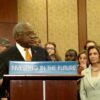
South Carolina’s current congressional map includes one Democrat-held district, the 6th, represented by longtime Rep. Jim Clyburn. Republican leaders in the House advanced a new map that would adjust boundaries to make the 6th District more competitive for their party, effectively targeting it for elimination as a safe Democratic Party seat.
The House passed the map and related procedural measures in mid-May, which would also have required shifting the June 9 primary election dates.
The Senate had previously blocked similar steps. On May 12, a vote to amend the sine die resolution — allowing lawmakers to consider redistricting after the regular session ended — failed by a vote of 29-17, falling short of the required two-thirds majority. Five Republicans voted with all Democrats against the measure, including Senators: Sean Bennett, Chip Campsen, Tom Davis, Greg Hembree, and Shane Massey.
The May 26 cloture vote to limit debate and force a final decision on the redistricting bill failed 20-24. Twelve Republicans voted no alongside Democrats. Several of the original five defectors from the May 12 vote remained opposed, while additional senators joined them or shifted positions.
Senator Jeff Zell, for example, had supported earlier procedural steps but opposed the latest cloture motion, citing concerns over timing and the process.
Senate Majority Leader Shane Massey, who voted against the measure in both instances, spoke about his decision on the floor. “There are likely consequences for me, personally, taking the position that I am right now. I’m comfortable with that. I may not like it, but I’m comfortable with it,” he said.
Tuesday’s vote effectively locks in the current map for the 2026 cycle and blocks Republicans from being able to draw out Clyburn’s district in time. Early voting in South Carolina’s primaries began on Tuesday, which further complicated the vote.